Of course he was. The story at Harrison had leaked, like stories always do. Parents talked. Recruits gossiped. Someone’s cousin knew someone’s uncle who knew a guy in logistics. By the time anything reaches my father, it’s already been polished and passed around like church gossip.
“What’s the version this time?” I asked.
She hesitated. “He tells people you… tricked them. That you’re some kind of… desk clerk who got lucky. That the sergeant was confused. That they saluted the wrong woman.”
I almost laughed. Not because it was funny, but because of course that’s where he’d land. Anything to keep the narrative intact.
“And you?” I asked. “What do you tell them?”
“I tell them,” she said, voice thin, “that I don’t know.”
I swiveled my chair away from the glass wall so no one passing by could read my expression.
“Do you want to know?” I asked.
“Yes,” she whispered. “And no. Sometimes I think knowing would make it easier. Sometimes I think it would break me.”
I let that sit between us. My mother had always been better at pretending than admitting.
“There’s another reason I called,” she added after a moment. “Adam got orders.”
Of course he did.
“Where?” I asked.
She named a place I knew too well—a region that existed in my regular briefings, a city whose infrastructure maps I’d memorized years ago, a deployment that would look impressive on his record and quietly burn years off his life.
“He wants you there,” she continued. “For the send-off. He said he’ll text you the details himself.”
“And Dad?” I asked.
Silence. Then a long, tired exhale.
“Your father says he won’t stop him from inviting you.”
Not exactly a ringing endorsement.
“Are you coming?” she asked.
“Orders permitting,” I said.
It was the safest answer I could give, and the truest. Echo doesn’t care about family timing. It cares about signals and signatures and things that go wrong when no one’s looking.
Adam texted that night.
Leaving in six weeks. Small ceremony on base, just family. I want you to pin my patch, Cass. Not him.
My chest tightened as I read it.
You sure about that? I wrote back.
I’m sure who taught me what courage looks like, he replied. They just didn’t see it.
I stared at the words until the letters blurred.
All right, I typed. I’ll be there.
The morning of the send-off, the base air smelled like jet fuel, hot asphalt, and bad coffee—the unofficial cologne of the armed forces.
I arrived early, because old habits die harder than people think. I walked past families clustered in small knots, clutching folded programs and styrofoam cups, talking too loudly about mundane things because the real thoughts were too heavy to say.
The ceremony wasn’t grand. No stadium, no marching bands. Just a simple formation on the tarmac, a low platform with a microphone, flags straining lightly against the wind. A modest crowd. Enough witnesses to make it real.
I spotted my parents before they saw me.
My mother stood with her purse clutched under one arm like a shield, her hair sprayed into place so firmly it could have survived a hurricane. My father stood beside her in his good shirt, the one he wore to funerals and job interviews, hands shoved into his pockets like he might bolt if anyone asked him to feel anything complicated.
I approached from their left.
My mother noticed first. Her face flickered—surprise, then an attempt at warmth, then something softer she didn’t quite know how to show.
“Cassidy,” she said. “You made it.”
“Orders permitting,” I replied lightly.
My father glanced over, eyes sweeping from my boots to my face like he was assessing a stranger.
“Commander,” he said.
He put a strange emphasis on the title, like it was a slur he wasn’t sure he was allowed to use.
“It’s just Cassidy today,” I said.
He grunted, noncommittal.
We stood in strained silence until the commanding officer began to speak—standard remarks about honor, courage, and service. I’d heard versions of the speech in more places than I could count. It never got easier watching families smile bravely while their loved ones prepared to ship out.
Adam’s unit stood in formation, faces set with that mix of excitement and dread unique to soldiers who haven’t yet learned which part of themselves they’ll lose to the sand and the heat.
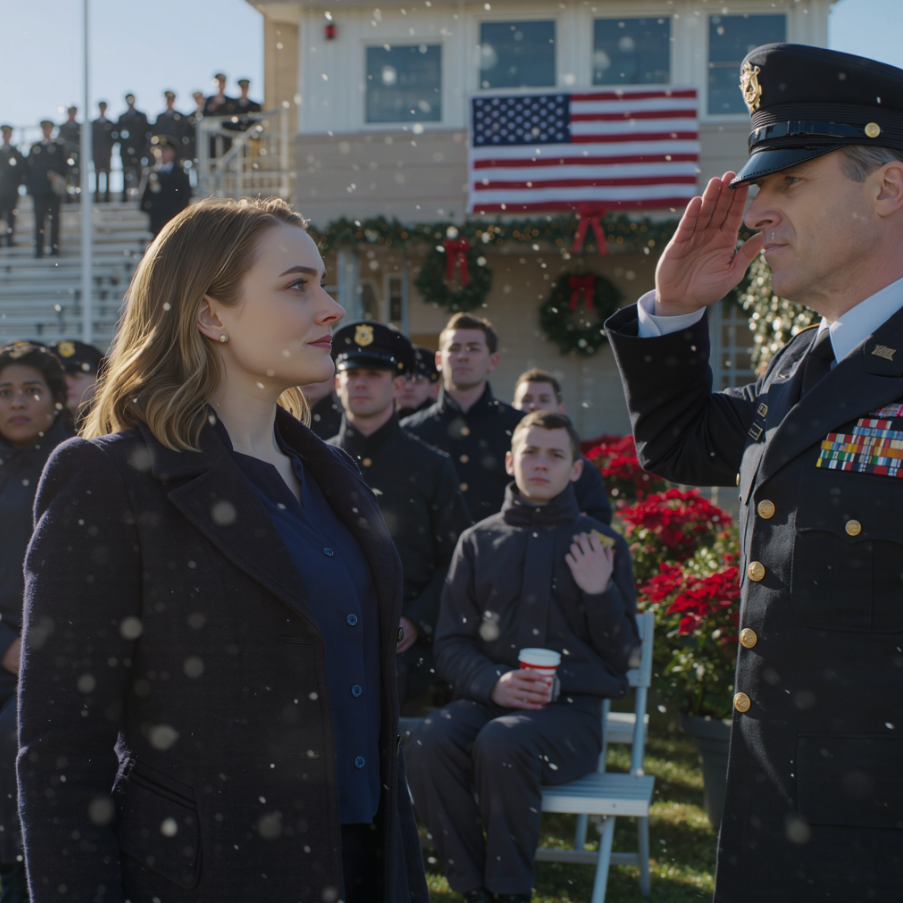
When they called his name, he stepped forward, chin high, eyes steady. The commanding officer pinned the official deployment insignia, said a few words about leadership potential, and then gestured toward the families.
“Special request from Specialist Roar,” he said into the mic. “He’s asked his sister to place his unit patch.”
Heads turned.
