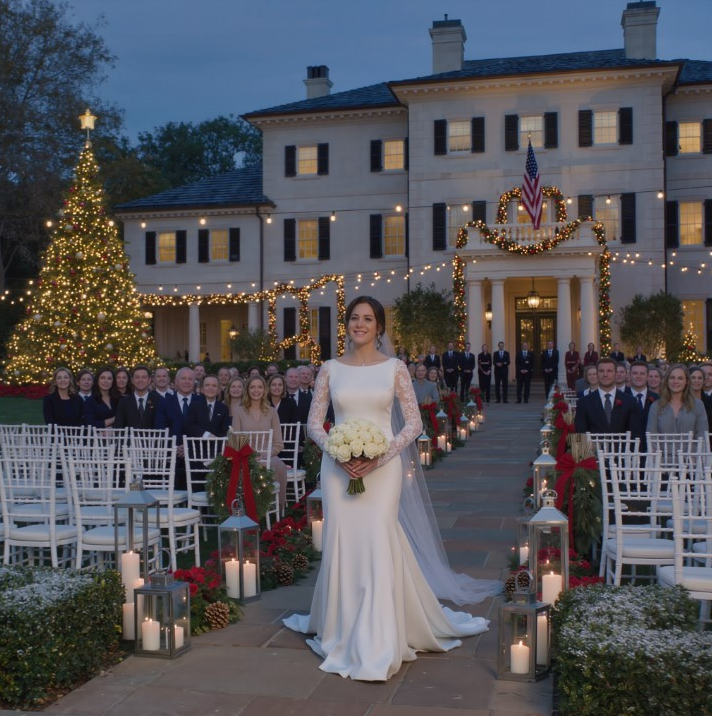
“You’ve been working yourself to death for three years. I’ve watched you fill those notebooks, stay late asking questions, study every aspect of this industry like your life depends on it. Maria told me about that bankrupt hotel that’s about to go to auction—the Riverside Inn. You’re ready for this, Crystal. I believe in you even if you don’t believe in yourself yet.”
The trust in his eyes completely undid me.
This was what love actually looked like.
Not the conditional approval I’d spent my childhood begging for.
Not the performance-based affection the Robbins family traded in.
This was someone betting everything on my vision, asking for nothing in return except the chance to support my dream.
“Take this money,” David said. “Buy that hotel and show your family what a disgrace actually accomplishes.”
Six months later, I used David’s $85,000 combined with a risky bank loan to purchase the bankrupt Riverside Inn.
The real work was about to begin.
And then an opportunity appeared that would open the door to my biggest breakthrough.
The Riverside Inn came on the market in 2008 during the financial crisis when banks were desperately trying to offload properties nobody wanted.
I first heard about it from Maria, who mentioned it casually one night after her shift.
“That old place downtown is going to auction next month,” she said. “Shame, really. It used to be beautiful back in the seventies.”
I drove past it the next day.
Fifty rooms of pure disaster.
Water-stained ceilings, carpets that reeked of mildew, windows so filthy you could barely see through them.
The place had a reputation for bedbugs that had killed its business years ago.
Weeds grew through cracks in the parking lot. The sign out front was missing half its letters.
Most people saw a money pit that would cost more to fix than it was worth.
I saw something different.
The location was prime—right downtown, walking distance to the convention center and theater district.
The building itself had good bones, beautiful art deco architecture buried under decades of neglect.
And most importantly, the asking price was sixty percent below market value because the bank just wanted it gone.
I leveraged David’s $85,000 and maxed out a $200,000 SBA loan that took three months and a small mountain of paperwork to secure.
The loan officer, a tired-looking woman named Patricia, asked me three separate times if I truly understood the risk I was taking.
“Most small hotels fail within the first year,” she said. “And you’re buying one that’s already failed during a recession.”
I understood the risk perfectly.
This was my one shot.
If I failed, we’d lose everything—David’s inheritance, our savings, probably our credit for the next decade.
But if I didn’t try, I’d spend the rest of my life wondering what might have been.
That wasn’t acceptable.
Maria agreed to leave her secure position at the Grand View and become my partner, taking sweat equity instead of salary until we turned a profit.
People thought we were insane.
My former co-workers told me I was throwing my life away.
Even David’s mother pulled me aside and gently suggested I reconsider.
I signed the papers anyway.
The first six months were the hardest work of my life—and that’s saying something, coming from someone who’d worked three jobs simultaneously.
I did demolition myself, tearing out water-damaged drywall and moldy carpeting until my hands bled through my work gloves.
I slept in what would eventually become my office, on an air mattress surrounded by construction dust.
I learned basic plumbing from YouTube videos at three in the morning because we couldn’t afford to hire contractors for everything.
David came by after his engineering shifts to handle structural assessments, telling me which walls we could safely remove and which beams needed reinforcement.
Maria redesigned our entire operational structure, creating systems that would maximize efficiency with our limited staff.
We reopened six months later with thirty renovated rooms instead of fifty, having decided to do it right rather than do it fast.
Onze focus was eenduidig: elke gast het gevoel geven dat hij of zij de belangrijkste persoon in het gebouw is.
Ik ontwikkelde een managementfilosofie die mijn kenmerkende aanpak werd.
Ik heb alle medewerkers – van schoonmakers tot receptionisten en management – met hetzelfde intensieve programma getraind.
‘Gastvrijheid is geen slavernij,’ zei ik tegen hen. ‘Het is kunst. Het is het creëren van een ervaring die zo memorabel is dat mensen ervoor kiezen terug te komen, niet omdat ze moeten, maar omdat ze dat willen.’
Ik betaalde een bovengemiddeld salaris, maar eiste daarvoor uitmuntende prestaties terug.
Ik heb mensen ontslagen vanwege onbeleefdheid tegenover gasten of collega’s, maar nooit vanwege eerlijke vergissingen.
Fouten konden worden gecorrigeerd. Slechte attitudes vergiftigden alles wat ze aanraakten.
We hebben een systeem geïmplementeerd dat ik het gastgeheugensysteem noemde.
Alle medewerkers gaven hun voorkeuren aan en deelden deze.
Mevrouw Johnson houdt van extra kussens en de krant die vroeg bezorgd wordt.
Meneer Patel geeft vanwege knieproblemen de voorkeur aan kamers op de begane grond.
De Hendersons vieren hun huwelijksjubileum en genieten van champagne op hun kamer.
De technologie verzorgde onze reserveringen en facturering, maar het waren de mensen die de relaties onderhielden waardoor mensen zich echt gewaardeerd voelden.
Ik stond erop dat er elke dag verse bloemen in de gemeenschappelijke ruimtes stonden, zelfs toen ons budget zo krap was dat ik ze soms zelf betaalde.
‘We verkopen een beleving,’ zei ik dan tegen mijn personeel. ‘Niet zomaar een bed en een badkamer. Dat kan iedereen bieden. Wij bieden het gevoel dat je thuiskomt.’
Binnen twee jaar had de Riverside Inn een bezettingsgraad van 95 procent en een wachtlijst voor weekendreserveringen.
Reisbloggers begonnen lovende recensies te schrijven.
De lokale pers publiceerde uitgebreide artikelen over onze ommekeer.
Elke dollar winst werd direct weer in het bedrijf geïnvesteerd.
Ik opende een tweede vestiging in 2011.
Een derde in 2013.
In 2015 beheerde ik vijftien hotels in vijf staten.
Ze deelden allemaal dezelfde filosofie: luxe door oprechte zorg, niet zomaar dure meubels.
Je kunt een onvergetelijke ervaring creëren in een bescheiden ruimte als je mensen het gevoel geeft dat ze gewaardeerd worden.
Dat was iets wat de familie Robbins nooit had begrepen: dat ware waarde voortkomt uit hoe je mensen behandelt, niet uit hoeveel geld je tentoonspreidt.
In oktober 2020 publiceerde het tijdschrift Business Weekly een coververhaal met mijn foto en een kop die me de stuipen op het lijf joeg toen ik hem voor het eerst zag.
Zelfgemaakte vrouw bouwt luxehotelimperium op ter waarde van $680 miljoen.
Het artikel beschreef mijn hele carrière in detail: van receptioniste tot CEO, van een failliet gebouw tot een bloeiende keten.
Ze prezen mijn innovatieve aanpak, mijn ethisch leiderschap en de bedrijfscultuur die ik had opgebouwd.
De foto’s toonden me in elegante zakelijke kleding, vol zelfvertrouwen staand in mijn vlaggenschiphotel, alsof ik thuishoorde in die wereld van succes.
Het verhaal ging binnen enkele uren viraal.
Mijn inbox stroomde vol met uitnodigingen voor spreekbeurten, interviewverzoeken en samenwerkingsvoorstellen.
Concurrenten begonnen mijn bedrijfsmodel te bestuderen.
Businessscholen hebben contact met me opgenomen om casestudies te ontwikkelen voor hun MBA-programma’s.
Vakpublicaties publiceerden analyses over de Robbins-aanpak in de horeca.
Maar ik wist dat de echte impact van één specifieke lezer zou komen.
Mijn vader volgde het zakennieuws obsessief. Zo hield hij de concurrentie in de gaten en volgde hij de trends in de branche.
De naam Robbins had nog steeds gewicht in de schaal in zijn sociale kringen, zelfs toen zijn eigen bedrijf het moeilijk had, en ik wist dat het zien van zijn afgewezen dochter op tijdschriftcovers, die een imperium runde dat meer waard was dan zijn hele vastgoedportefeuille, hem van pure spijt zou verteren.
Wat ik niet had verwacht, was hoe snel hij contact zou opnemen – of welke wanhopige situatie hem ertoe zou drijven om na vijftien jaar eindelijk zijn stilte te doorbreken.
En toen verscheen die krantenkop op een telefoon waarvan ik dacht dat die nooit meer belangrijk voor me zou zijn.
Ik zat in een bestuursvergadering waarin uitbreidingsvoorstellen voor onze vestigingen aan de westkust werden besproken, toen mijn telefoon op de vergadertafel trilde.
Normaal gesproken zette ik mijn telefoon uit tijdens vergaderingen, maar ik verwachtte een telefoontje van onze aannemer uit Seattle.
Het nummer dat op mijn scherm verscheen was onbekend, maar iets zette me ertoe aan om de preview van het sms-bericht te bekijken.
Familiediner, zaterdag, 19:00 uur. Belangrijke zaken.
Vader.
De woorden voelden als ijskoud water dat langs mijn ruggengraat stroomde.
Ik staarde ernaar en las ze nog eens door om er zeker van te zijn dat ik niet aan het hallucineren was.
Mijn CFO was midden in een zin over de verwachte omzet toen hij plotseling stopte en vroeg of alles in orde was.
Ik besefte dat ik mijn adem had ingehouden, mijn hele lichaam was als versteend.
Vijftien jaar.
Vijftien jaar absolute stilte.
En dit was hoe hij ervoor koos om het te verbreken.
Geen « Lieve Crystal. » Geen « Ik hoop dat dit bericht je goed bereikt. »
Geen woord over de bruiloft die hij had geboycot, geen felicitaties voor het imperium dat ik had opgebouwd, geen erkenning dat er anderhalf decennium was verstreken sinds hij me voor het laatst zijn aandacht waardig had geacht.
Slechts een dagvaarding, gebracht met dezelfde nonchalante autoriteit waarmee hij omging toen ik als kind bij hem in huis woonde.
Alsof ik nog steeds de gehoorzame dochter was die opsprong wanneer haar dat werd bevolen.
Alsof er niets veranderd was.
De brutaliteit was adembenemend.
‘Het gaat goed met me,’ wist ik mijn CFO nog net te vertellen, terwijl ik de telefoon met het scherm naar beneden legde. ‘Ga gerust verder.’
Maar ik heb daarna niets meer van die vergadering gehoord.
Mijn gedachten tolden door mijn hoofd; ik analyseerde het bericht vanuit alle hoeken.
De oude Crystal – degene die in haar trouwjurk zijn afwijzing had gelezen, degene die wanhopig naar zijn goedkeuring verlangde – zou zich vreselijk hebben geërgerd aan dit bericht.
Ze zou zich hebben afgevraagd of het verzoening betekende, of hij misschien eindelijk haar succes had gezien en het wilde goedmaken.
Hoewel ze beter wist, had ze gehoopt dat bloed voor Richard Robbins misschien toch iets zou betekenen.
Maar ik was niet meer die Crystal.
Ik was de vrouw die vanuit het niets een imperium van 680 miljoen dollar had opgebouwd.
De vrouw die mensen en situaties met dezelfde precisie had leren doorgronden als waarmee ik balansen analyseerde.
En ik wist precies wat deze boodschap betekende.
Ze wilden me niet hebben.
Ze wilden mijn geld.
De timing was geen toeval.
The Business Weekly cover had run two weeks ago. The story had been picked up by every major business publication, shared thousands of times on social media, discussed on morning talk shows.
There was no way my father hadn’t seen it. No way he didn’t know exactly how successful I’d become, how much my company was worth.
And now, suddenly, after fifteen years of treating me like I didn’t exist, I was “family” again.
I didn’t respond to the text immediately.
Instead, I spent the next two days having my corporate attorney run comprehensive background checks on Robbins Real Estate and every member of my family.
What came back confirmed everything I suspected.
Robbins Real Estate was hemorrhaging money.
Three major developments had failed spectacularly between 2018 and 2019—projects my father had leveraged heavily, betting on a market boom that never materialized.
Bank loans totaling over $12 million were coming due within the next six months.
The company had laid off forty percent of its staff.
Trade publications buried in the business section ran articles with headlines like Robbins Real Estate Struggles to Adapt to Changing Market.
I pulled up Madison’s Instagram account, which I hadn’t looked at in years.
She was still posting photos of designer shopping trips, luxury vacations, new handbags that cost more than most people’s monthly rent.
Where was that money coming from if the family business was failing?
The trust fund that had favored her three-to-one over me should have run dry years ago at her spending rate.
Eleanor’s charity galas, once elaborate affairs covered by society pages, had become noticeably smaller and less prestigious. The venues were cheaper, the guest lists shorter, the photos showed fewer and fewer of the social elite who used to fill those events.
My father’s name appeared in financial circles, but not in the way it once had.
People whispered about poor decisions, about stubbornness, about refusing to modernize or adapt.
The Robbins name still carried weight, but now it was the weight of faded glory rather than current power.
The family wasn’t just in trouble.
They were facing potential bankruptcy, social humiliation, the complete collapse of everything my father had built his identity around.
And now, suddenly, the daughter he’d called a disgrace was “family” again.
The math was simple and brutally insulting.
I could have ignored the message. Deleted it. Blocked the number.
That would have been easier. Cleaner. Less complicated.
But easy wasn’t satisfying.
I’d spent fifteen years building power brick by brick, hotel by hotel, success by success.
Now I was going to use it.
I responded with a single word:
Acknowledged.
Let them interpret that however they wanted.
Let them wonder if I was coming.
Let them stew in uncertainty the same way I’d spent my entire childhood uncertain whether I’d ever be good enough for them.
Then I made a phone call to William Hayes.
William was seventy-three now—the attorney who’d managed my mother’s estate and who’d become something of a trusted adviser over the years.
He was the only person alive who’d known my mother’s true story, who’d witnessed firsthand what Richard Robbins really was behind the polished public image.
“I need you at a family dinner,” I said when he answered. “Saturday at seven.”
The silence on the other end of the line spoke volumes.
William understood immediately what this meant. What it would mean for me to walk back into that house after fifteen years.
“Are you sure you’re ready for this, Crystal?” His voice was gentle but serious.
I thought about my wedding day.
The empty chairs.
The text message calling me a disgrace.
The years of being told I wasn’t good enough, smart enough, worthy enough to carry the Robbins name.
“I’ve been ready since I was eighteen years old,” I said.
William agreed to accompany me, but then his voice took on a tone I’d never heard from him before—something weighted and careful.
“There are things about your family you don’t know yet, Crystal. Things your mother made me promise to reveal only when you were strong enough to handle them.”
A chill ran down my spine.
“What things?”
“Saturday dinner,” William said, his voice gentle but absolutely firm. “You’ll need to see their faces when the truth comes out. You’ll need to watch them realize what they’ve done and what they’re about to lose.”
I hung up with more questions than answers.
But one thing was absolutely certain.
This dinner would be nothing like what my family expected.
And I knew exactly what I’d bring to that dinner.
The person who holds secrets that could destroy them all.
William’s cryptic words about secrets my mother wanted revealed stayed with me for the rest of the week.
I kept replaying them in my mind, trying to decode what he meant, what truths could possibly be left after all these years.
But the more I thought about it, the more my mind drifted back to a moment eighteen years earlier that I’d never fully understood until now.
It was 2002, and I was twenty-five years old, working two jobs and living in an apartment barely bigger than a closet.
I’d lost touch with most of my family by then, not that there had been much to lose.
My mother had been dead for seven years, and my father had made it clear I wasn’t welcome in his world unless I came crawling back on his terms.
Then I received a call from William Hayes, an attorney whose name I vaguely recognized from my mother’s funeral.
He asked me to come to his office for “a matter concerning your mother’s estate.”
I remember being confused.
My mother had died seven years earlier, and my father had told me there was no inheritance, that everything had gone to him as the surviving spouse.
What could possibly be left to discuss?
William’s office was in an old building downtown, all dark wood and leather chairs that smelled like tobacco and old books.
He was white-haired even then, though his eyes were sharp and clear.
He didn’t waste time with small talk.
He simply handed me an envelope, cream-colored and thick, with my mother’s handwriting on the front.
Envelope One: To Be Opened When Crystal Reaches Age 25.
My hand shook as I opened it.
Inside was a cashier’s check for $50,000 and a letter, also in my mother’s distinctive handwriting.
I can still recite it from memory.
My darling girl,
If you’re reading this, you’ve survived the hardest years. This money is for your education or your dreams—whatever you choose. I’m sorry I couldn’t protect you longer. I’m sorry I won’t be there to watch you become the woman I know you’ll be.
But I want you to know that I see you. I believe in you. And I love you more than you’ll ever understand.
Be strong.
Love,
Mom.
I wept in William’s office that day, clutching that letter like it was my mother’s hand reaching across death to hold mine one more time.
William sat quietly, letting me cry. And when I finally looked up, he explained.
“Your mother established a secret trust before she died,” he said. “She knew she had cancer. She hid it from everyone except me. I was her attorney, and she needed someone she could trust.
“She knew your father would try to control everything after her death, and she was terrified of what would happen to you.”
“There are three envelopes total,” William continued. “Your mother was brilliant and terrified in equal measure. She planned this carefully.
“Envelope One, which you’ve just opened, was for your financial foundation at twenty-five. She figured by then you’d be old enough to use it wisely, but young enough to still need help.”
I wiped my eyes.
“What about the other two?”
“Envelope Two will open when you achieve true independence,” William said. “Your mother defined that legally as a net worth exceeding one million dollars, earned through your own efforts, without family money.
“Envelope Three will open when you’ve found peace. As executor of her trust, I’ll determine when that moment has arrived.”
“Why are you telling me all this now?” I asked.
William’s expression turned sad.
“Because you need to know your mother never abandoned you. She loved you fiercely. Everything she did was to protect you from a man I should have helped her escape, but didn’t. I’ve carried that guilt for seven years, Crystal. The least I can do is honor her wishes now.”
I didn’t fully understand what he meant then.
I was too young, too overwhelmed by grief and gratitude.
I used that $50,000 to pay for business courses and keep myself afloat during the lean years.
It became the foundation of everything I built, though I didn’t realize it at the time.
Now, at forty-three, preparing for Saturday’s dinner, I understood perfectly.
Because two weeks before my father’s text message arrived, William had called me to his office again.
“You’ve exceeded $1 million in net worth,” he said with a slight smile. “Actually, you’ve exceeded $680 million. It’s time for Envelope Two.”
This envelope was thicker, heavier than the first.
Inside were legal documents, forensic handwriting analyses, bank records, and another letter from my mother.
This one was different—not tender, but urgent, clinical, detailed.
She explained that my maternal grandparents had died in 1994, leaving their entire estate to her—approximately $3 million in property and investments.
But the will was never properly executed because my father had forged her signature on documents redirecting the inheritance to himself.
My mother had discovered this in 1995, shortly before her cancer diagnosis.
