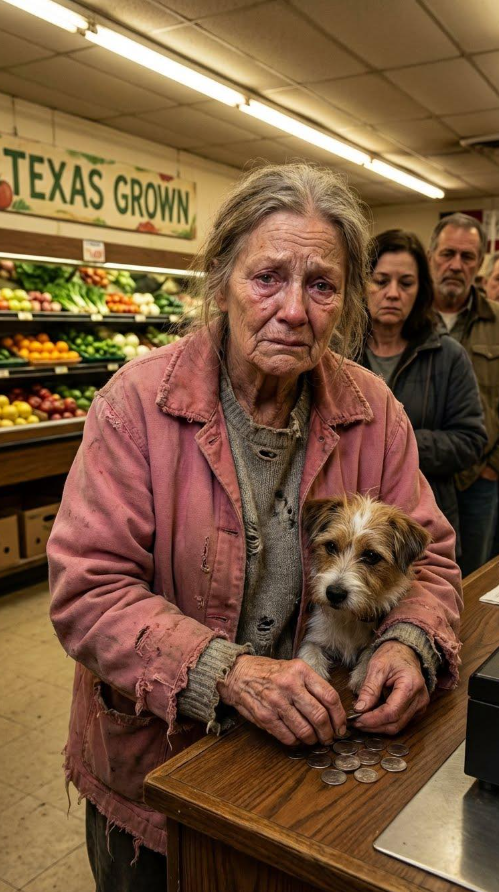
Standing there was Ethan, the grocery clerk from that afternoon, holding a plain white envelope with my name written in shaky handwriting. He explained, carefully and respectfully, that the woman I had helped—Mrs.
Hargrove—had passed away shortly after our encounter. Before she did, she asked that the envelope be delivered to me. The news was sobering, and I invited him inside, unsure of what to expect but sensing that the moment carried weight.
Inside the envelope was a letter written with honesty and grace. Mrs.
Hargrove thanked me not for the money, but for seeing her as a person when others did not.
She explained that kindness, freely given, mattered more to her than pride or appearances.
Along with the letter were documents showing that she had left me her modest home and savings—nothing extravagant, but enough to change the direction of my children’s lives.
She wrote that she wanted what she had to go to someone who led with compassion, and her request was simple: care for your children, and when you are able, help someone else as you helped me.
Reading her words, I felt overwhelmed not by the gift itself, but by the trust behind it.
That night, after my kids fell asleep, I sat at the kitchen table and reread the letter, thinking back to the grocery store line and how close I often feel to standing on the other side of it.
Ik realiseerde me dat mevrouw Hargrove’s boodschap niet over redding of beloning ging—het ging over verantwoordelijkheid. Vriendelijkheid vereist geen perfecte timing of extra middelen; Het vraagt alleen dat we handelen wanneer we kunnen.
Haar vertrouwen in mij werd iets wat ik nu voortzet, een herinnering dat zelfs kleine keuzes op manieren naar buiten kunnen golfen op manieren die we misschien nooit verwachten.
De toekomst voelt nu anders—niet makkelijker, maar stabieler—en ik ben van plan haar vertrouwen te eren door te voldoen aan de persoon waarvan zij geloofde dat ik het was.
